
Cat Litter Boxes
A Cleaner Cat Corner. A Better-Organised Home.
A cat's litter area is one of the most frequently used spaces in the home, so choosing the right litter box makes a difference to everyday cleaning and household organisation. From open litter trays to enclosed toilets and discreet furniture-style designs, a well-chosen cat litter box can help manage scattered litter, contain everyday mess and create a more comfortable toileting area for your cat.
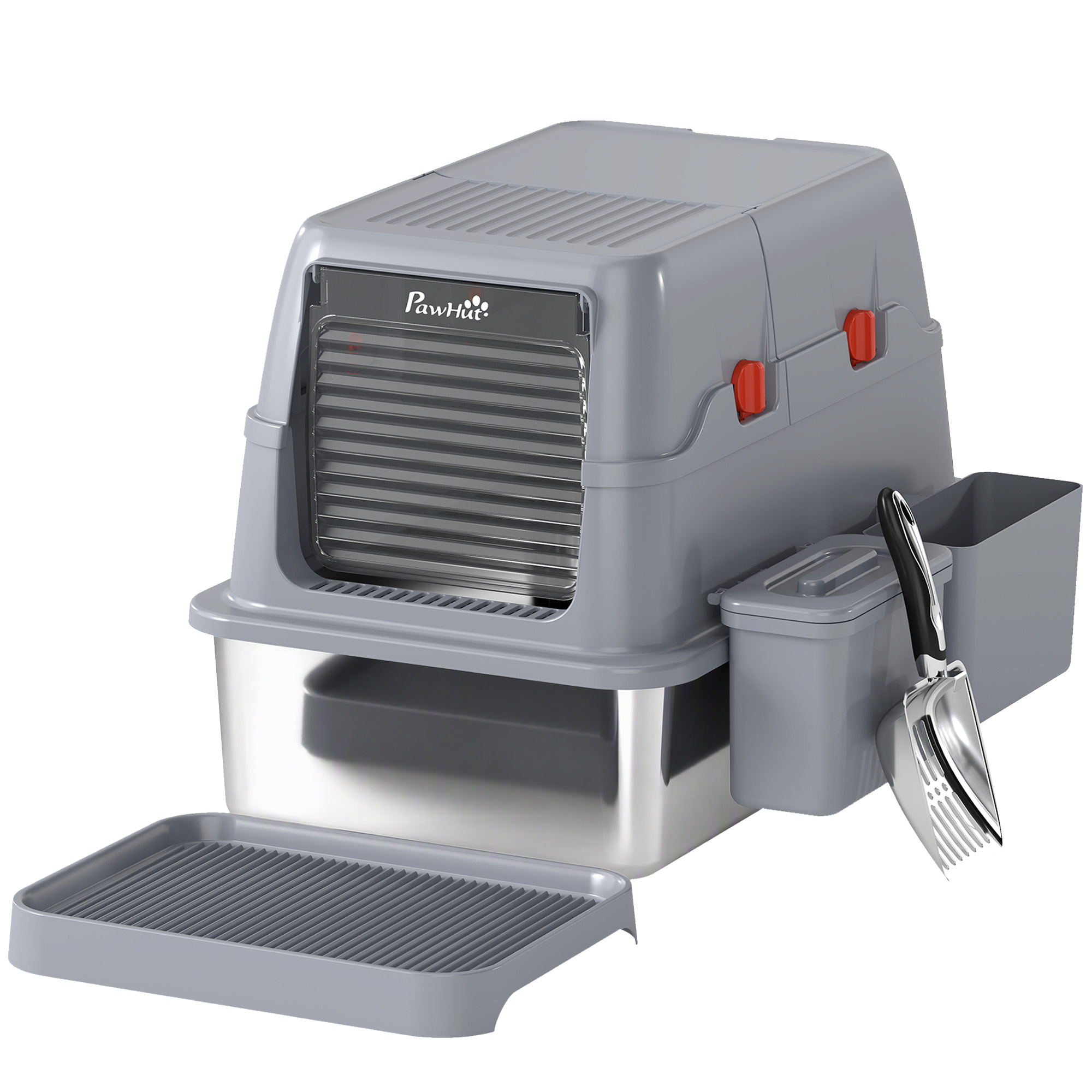
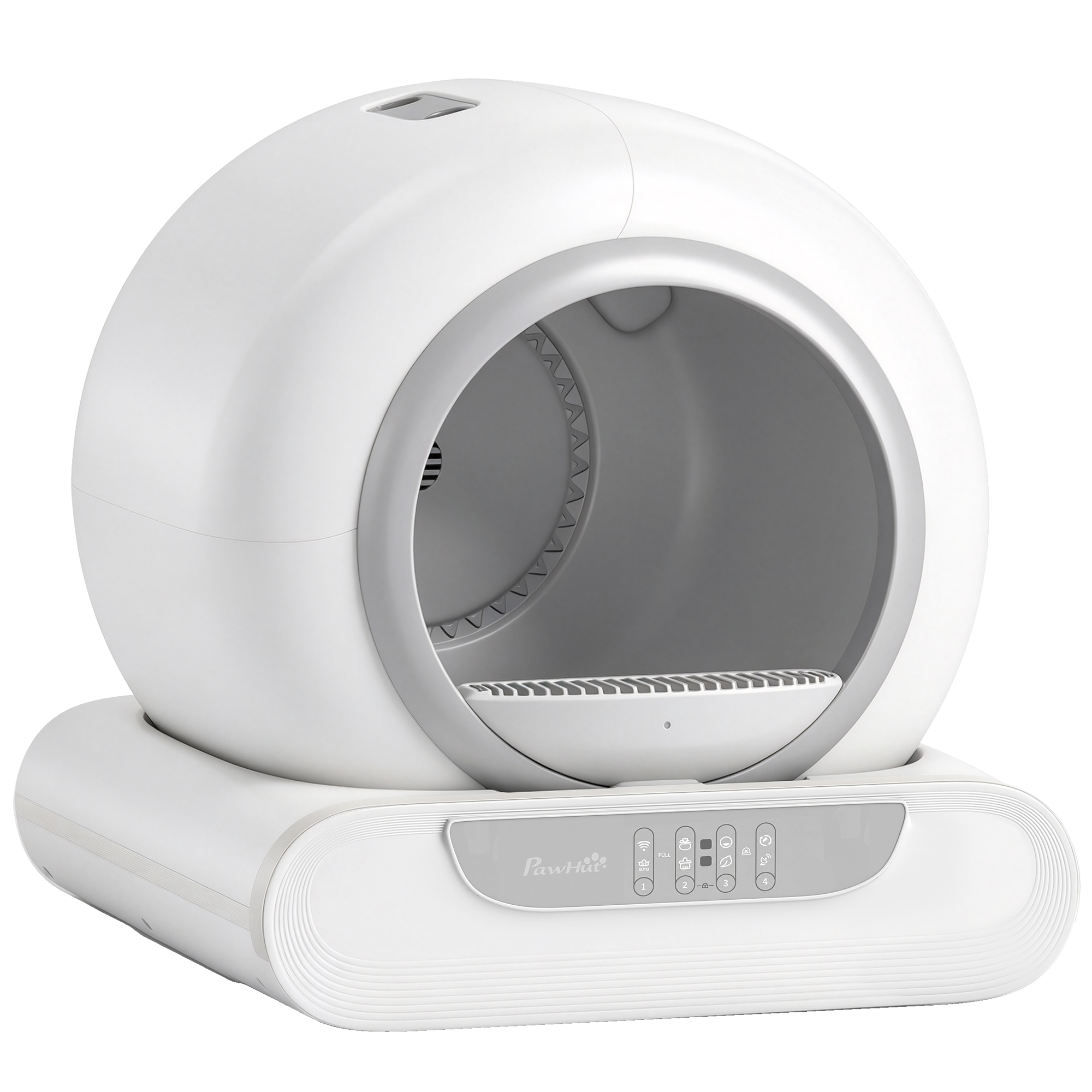
The PawHut cat litter box collection at Aosom EU offers a variety of practical solutions, including stainless steel litter trays, covered cat toilets, top-entry designs, extra-large litter boxes and hidden litter cabinets. Selected models also feature removable trays, activated carbon filters, litter-catching steps and integrated storage. Whether you are furnishing a dedicated cat corner or looking for a more discreet solution for your living space, discover designs that make everyday litter care easier to manage.
Open or Covered? Find the Right Litter Box Design
The first decision when choosing a cat litter box is whether to select an open tray or an enclosed design. Both have practical advantages, and the best option depends on your cat's preferences, toileting habits and available space.
Open Cat Litter Boxes
Open litter trays provide easy access and allow cats to see their surroundings while using the toilet. Their straightforward construction also makes daily scooping and checking the litter condition convenient.
Selected PawHut open litter boxes feature raised side walls, deep stainless steel trays and additional accessories such as scoops and litter-catching mats.
- Easy access – No covered entrance or enclosed space to navigate.
- Open visibility – Allows cats to see their surroundings.
- Convenient cleaning – Makes removing waste and replacing litter straightforward.
- High-sided construction – Helps contain litter and splashes during digging.
Open designs can be particularly useful for kittens, older cats or pets that prefer unrestricted access. However, cats that scatter litter enthusiastically may benefit from a model with higher sides or a separate litter-catching mat.
Covered Cat Litter Boxes
Covered litter boxes feature an enclosed upper section that creates a more sheltered toileting area. They can help contain litter scatter and provide additional privacy, while selected models incorporate filters and removable lids for easier maintenance.
The PawHut collection includes covered designs with front entrances, top-opening lids, removable trays and activated carbon filters.
- Enclosed structure – Creates a more sheltered toileting space.
- High surrounding walls – Help reduce litter and urine splashes outside the tray.
- Removable covers – Allow easier access during cleaning.
- Filter compartments – Accommodate activated carbon filters to help manage unpleasant odours.
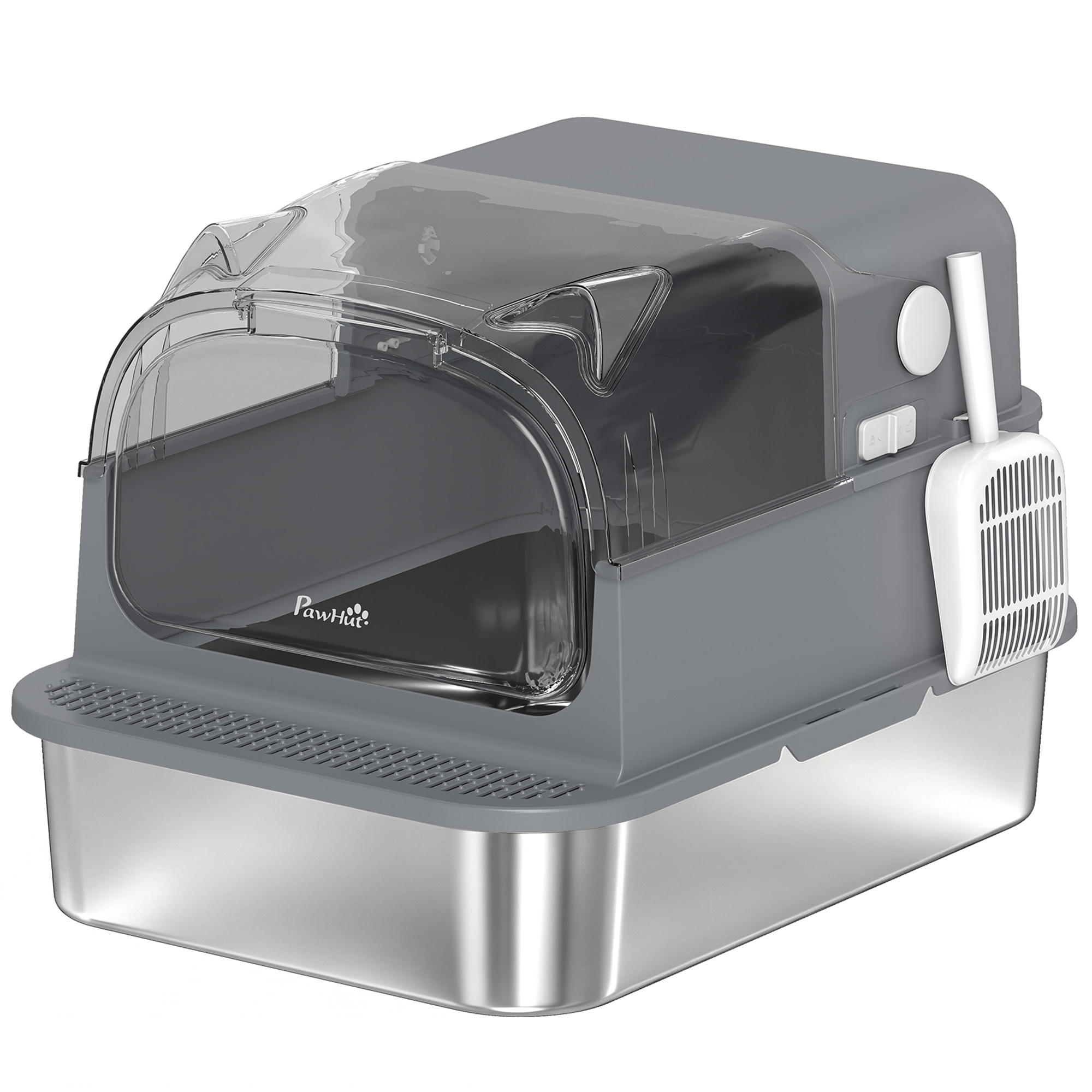
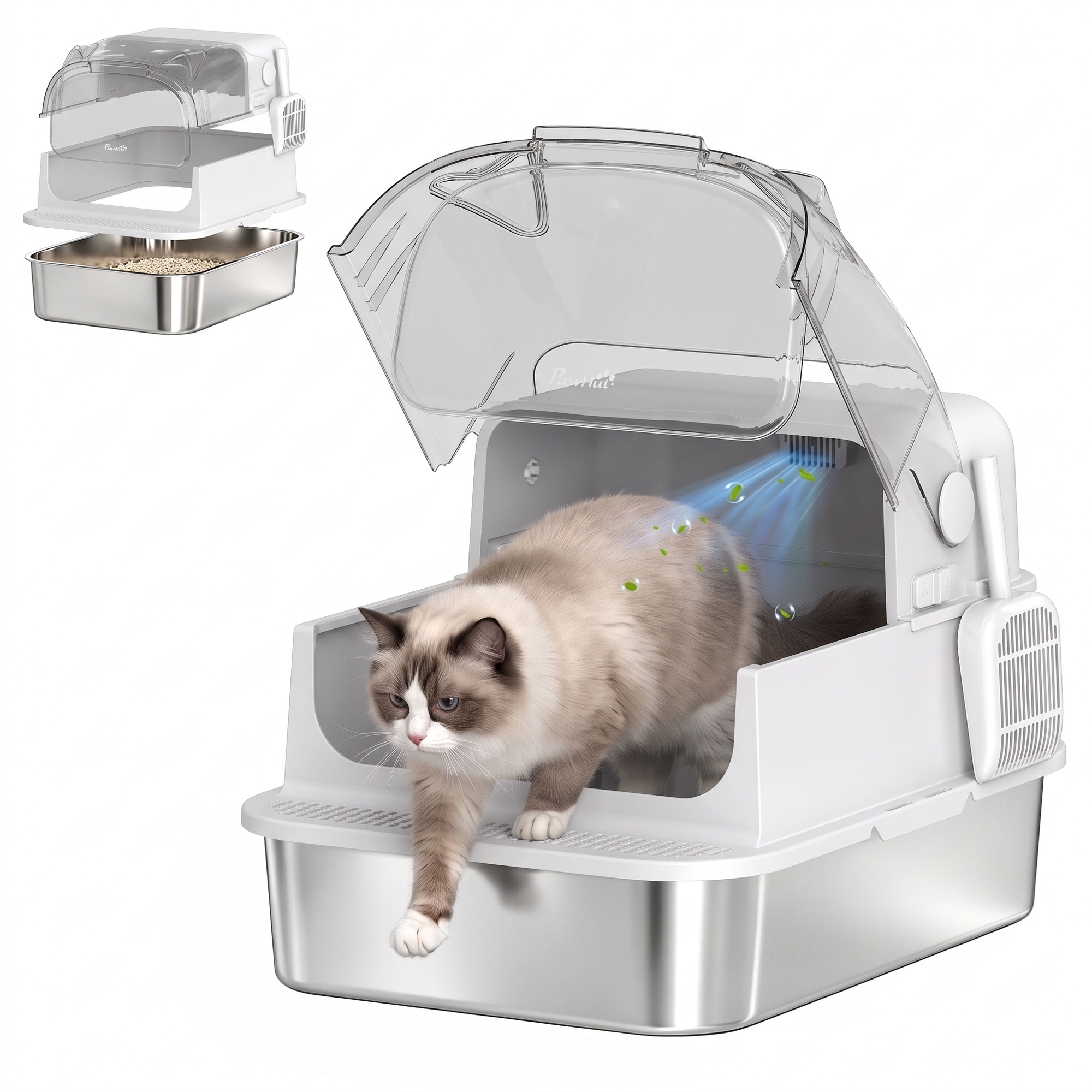
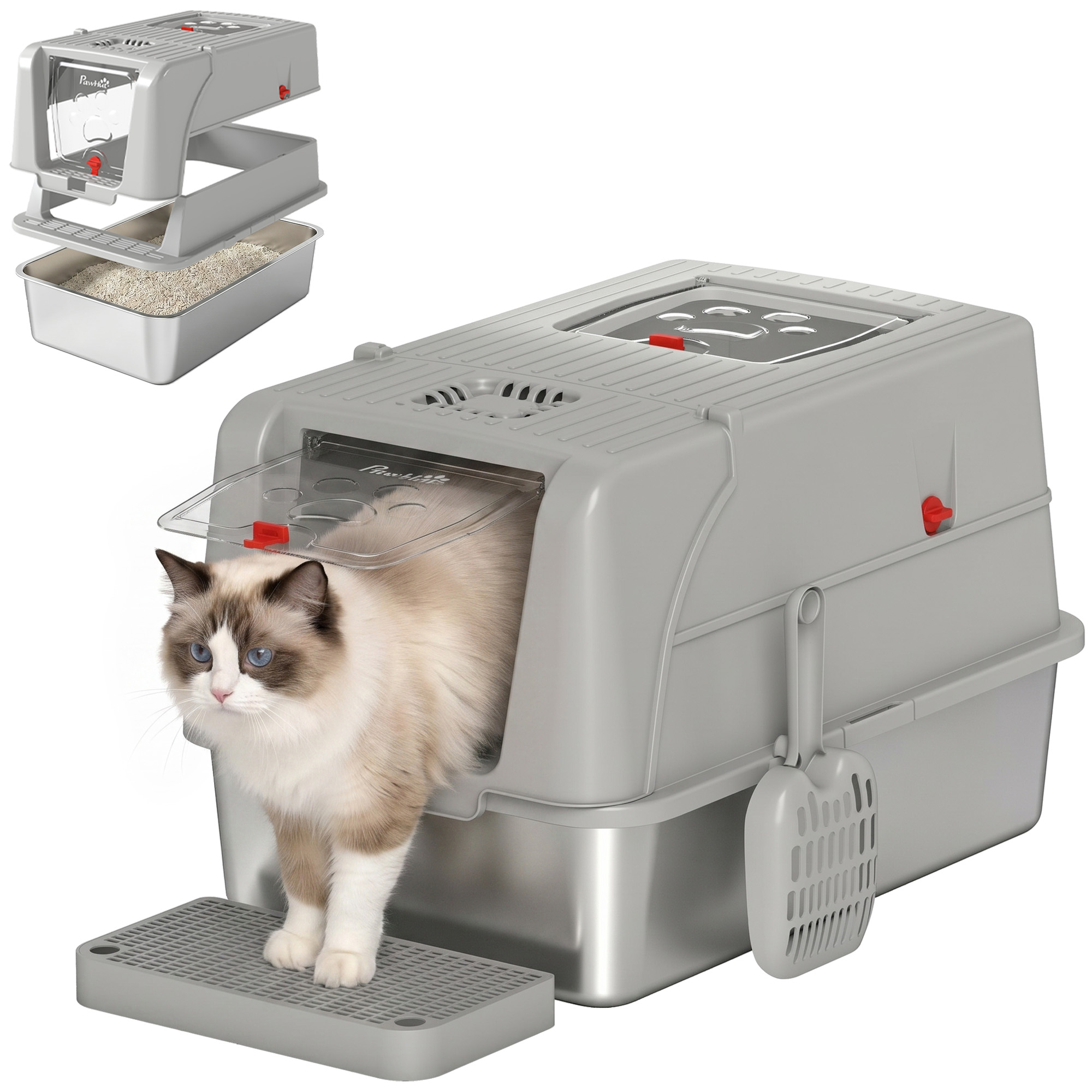
For example, the PawHut Covered Cat Litter Box with Stainless Steel Tray combines an enclosed structure with a front entrance, top exit and integrated litter-catching area.
Before switching to an enclosed design, consider whether your cat is comfortable entering covered spaces. If your cat hesitates, an open or semi-enclosed model may be a better starting point.
Stainless Steel or Plastic? Compare the Tray Materials
The litter tray is exposed to moisture, waste and repeated cleaning, making its material an important consideration. The PawHut collection includes both stainless steel and plastic-based designs, each offering different practical characteristics.
Stainless Steel Cat Litter Boxes
Stainless steel litter trays are designed for repeated everyday use. Their smooth, non-porous surfaces are easy to wipe down and are less likely to retain moisture and residue than scratched plastic surfaces.
Selected PawHut models use 201 stainless steel for the main litter tray, combined with ABS or polypropylene components in the surrounding structure.
Key advantages include:
- Easy-clean surface – Smooth metal is convenient to wipe and wash.
- Scratch resistance – Helps maintain a smoother surface during regular use.
- Moisture resistance – Stainless steel does not absorb moisture like some porous materials.
- Durable construction – Suitable for repeated litter changes and cleaning.
- Odour management – A non-porous surface helps reduce the accumulation of residue that can contribute to lingering smells.
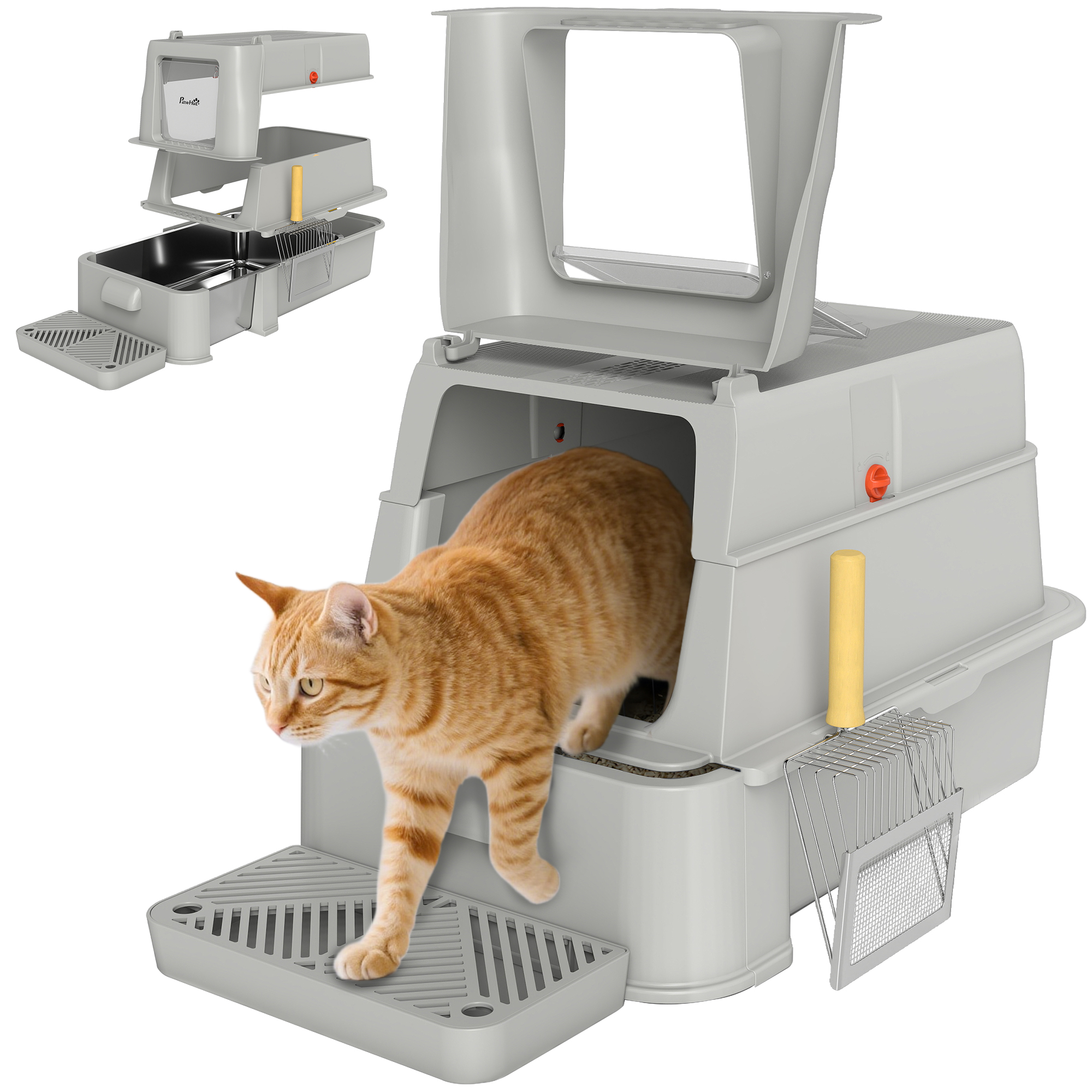
The PawHut XL Stainless Steel Cat Litter Box 68L features a 201 stainless steel base, high walls, a pull-out drawer and a flip-top lid. Its 3-in-1 construction can be configured as a fully enclosed box, a semi-open high-sided tray or an open stainless steel base.
Plastic Cat Litter Boxes
Plastic litter boxes offer lightweight construction and flexible designs. They are commonly used in covered models with hinged lids, removable tops and integrated entry systems.
- Lightweight construction – Easier to reposition and handle during cleaning.
- Flexible shapes – Supports different enclosed, semi-enclosed and top-entry configurations.
- Removable components – Selected models can be separated for easier access.
- Colour options – Available in different finishes to suit indoor spaces.
When choosing a plastic litter box, check the surface condition regularly. Scratched or damaged areas should be cleaned carefully, as accumulated residue can make maintenance more difficult over time.
Top Entry, Front Entry or Dual Entry?
The entrance design determines how your cat accesses the litter area and how easily litter can be carried outside on its paws. PawHut offers several configurations, including traditional front-entry boxes, top-entry toilets and models with both front and top access.
- Front-entry litter boxes – Provide a familiar entrance and are generally straightforward for cats to access.
- Top-entry litter boxes – Use an opening on the upper section, with selected designs incorporating a perforated exit surface to catch loose litter.
- Dual-entry litter boxes – Combine a front entrance with a top exit, providing alternative access routes.
- Flip-top designs – Feature an opening lid for easier cleaning and access to the interior.
Some PawHut covered litter boxes feature a front entrance and a top exit. As cats climb out, loose litter can fall through the perforated surface rather than being carried directly onto the floor.
This configuration can help reduce litter tracking, particularly when combined with an appropriately positioned litter mat. However, top-entry designs are not suitable for every cat. Kittens, senior cats and pets with mobility difficulties may find climbing and jumping through an upper opening uncomfortable.
Always consider your cat's physical ability and familiarity with different entrance styles before choosing a model.
Extra-Large Litter Boxes for More Room to Move
Cats need enough space inside their litter box to enter, turn around, dig and adopt a comfortable toileting position. A tray that is too small may make everyday use uncomfortable, especially for larger cats or pets that prefer more room.
The PawHut collection includes XL and XXL litter boxes in different configurations, with selected stainless steel models offering capacities of 65L, 68L, 85L and 130L.
When comparing larger models, look beyond the capacity figure and check the actual internal dimensions.
- Internal floor area – Determines how much usable space is available for movement.
- Entrance dimensions – Make sure your cat can enter and leave comfortably.
- Wall height – Helps contain litter without making access unnecessarily difficult.
- Tray depth – Determines how much litter can be added.
- Maximum supported weight – Check the manufacturer's stated cat weight limit.
For example, the PawHut XL Stainless Steel Cat Litter Box 68L measures 60 x 40 x 45 cm externally and is specified for cats weighing up to 8 kg. Another PawHut XXL Stainless Steel Cat Litter Box offers a 130L capacity and a larger enclosed configuration.
Remember that external dimensions and internal usable space are different. A covered box with thick walls and an entrance structure may provide less usable room than its overall measurements suggest.
Keep Litter Where It Belongs
Scattered litter is one of the most common inconveniences of maintaining an indoor cat toilet. Cats naturally dig and cover their waste, and loose particles can become trapped between their paws before being carried into other areas of the home.
The PawHut collection includes several designs with integrated litter-catching features to help manage this everyday problem.
- Perforated exit steps – Allow loose litter to fall through as cats leave the enclosure.
- Raised entrance platforms – Provide an additional surface between the litter area and the floor.
- Integrated litter mats – Help collect particles around the entrance.
- High-sided trays – Help contain litter displaced during digging.
- Covered structures – Reduce the amount of litter that can escape directly from the sides.
The PawHut Covered Cat Litter Box with Stainless Steel Tray features a dedicated litter-recovery zone and a dual-entry configuration. The design helps collect loose particles as cats exit through the upper opening.
For additional protection, position a suitable litter mat directly outside the entrance. Choose a surface that is comfortable for your cat to walk across and easy to clean.
Odour Management Starts with the Right Setup
A clean litter area makes everyday life more comfortable for both cats and their owners. However, controlling unpleasant smells requires more than choosing an enclosed litter box. The litter itself, cleaning frequency, ventilation and placement all contribute to the overall result.
Selected PawHut models include activated carbon filters, deodorising sachets and enclosed structures designed to help manage unwanted smells.
- Activated carbon filters – Help absorb certain odour-causing compounds.
- Deodorising sachets – Provide an additional odour-management feature in selected models.
- Enclosed construction – Helps contain litter and waste within the toilet area.
- Stainless steel trays – Provide a smooth, non-porous surface for easier cleaning.
- Removable lids – Allow convenient access for regular scooping and maintenance.
The PawHut Covered Cat Litter Box with Hood and Pull-Out Tray includes two activated carbon filters, while selected stainless steel models come with a deodorising sachet.
Filters and deodorising accessories should be replaced according to the manufacturer's recommendations. They do not replace regular waste removal, litter replacement or washing the tray.
For a fresher litter area, remove waste at least once daily, check for damp litter and clean the tray regularly. Keep the surrounding area ventilated without placing the toilet directly beside food or water bowls.
Removable Trays for Less Time Spent Cleaning
Daily litter maintenance is easier when the tray can be accessed without dismantling the entire enclosure. PawHut offers several litter boxes with pull-out drawers, removable inner trays and opening lids designed to simplify routine cleaning.
- Pull-out drawers – Slide out from the front for convenient waste removal and litter replacement.
- Removable stainless steel bases – Allow the main litter surface to be taken out for washing.
- Flip-top lids – Provide access from above for daily scooping.
- Detachable covers – Make it easier to reach corners and internal surfaces.
- Included scoops – Provide a matching tool for separating waste from clean litter.
For example, the PawHut XL Stainless Steel Cat Litter Box 68L combines a front pull-out drawer with a top-opening lid. This allows everyday scooping and more thorough cleaning to be carried out through separate access points.
When choosing a removable-tray design, check how far the drawer extends, whether it can be removed completely and how easily it can be cleaned and dried before being returned to the enclosure.
Hidden Cat Litter Cabinets: Keep the Toilet Out of Sight
Not every household wants a conventional plastic litter box to remain visible in the living area. A hidden cat litter cabinet offers a furniture-style alternative, allowing the toilet to be integrated into the room's layout.
The PawHut collection includes enclosed litter cabinets with doors, side entrances, ventilation openings and additional storage features.
These designs can help create a more organised appearance while giving cats a designated toileting area.
- Furniture-style exteriors – Blend more naturally with living room and hallway furniture.
- Cabinet doors – Provide access to the enclosed litter area for cleaning.
- Side entrances – Allow cats to enter while keeping the main cabinet front closed.
- Ventilation openings – Help maintain airflow within the enclosed compartment.
- Additional storage – Selected models provide space for litter supplies and accessories.
- Decorative surfaces – Include natural wood-effect, white and industrial-inspired finishes.
The PawHut Hidden Cat Litter Box Cabinet in Scandinavian Style features two air vents, a side entrance and a sand-leak mat. Its natural and white finish gives it a more furniture-like appearance than a conventional litter tray.
For a more industrial look, selected PawHut litter cabinets combine a steel frame with a light wood-effect finish and a side-entry design.
Before purchasing a hidden litter cabinet, check the internal compartment dimensions and entrance size. Make sure the space accommodates the actual litter tray with enough room for your cat to enter, turn around and use it comfortably.
2-in-1 Cat Furniture for a More Functional Room
Some PawHut designs combine the litter area with another piece of cat furniture, helping make better use of available floor space. These multifunctional products bring together everyday pet care and additional features for resting, scratching or playing.
The collection includes combinations such as:
- Litter box cabinets with scratching panels – Combine a concealed toilet area with an external scratching surface.
- Cat litter furniture with storage – Provide additional compartments for suitable accessories.
- Cat trees with litter enclosures – Combine a toilet area with scratching posts, platforms and resting spaces.
- Cat furniture with cushions – Add a separate resting surface above or beside the enclosed litter area.
The PawHut Cat Tree with Toilet House, 2-in-1 Play Tower is a practical example. It combines a litter box enclosure with scratching posts, a platform and a cat bed in one piece of furniture.
This type of design can be particularly useful in smaller homes where separate pet furniture would occupy more floor space. However, make sure the litter compartment remains accessible and does not interfere with the cat's resting or playing areas.
Where Should You Place a Cat Litter Box?
The location of a litter box can influence whether a cat feels comfortable using it. Even a well-designed toilet may be overlooked if it is placed in an unsuitable area.
Choose a location that offers convenient access and a degree of privacy without making the cat feel trapped.
- Choose a quiet location – Avoid placing the litter box beside washing machines, noisy appliances or busy walkways.
- Keep it accessible – Make sure your cat can reach the toilet easily at all times.
- Avoid food and water areas – Place the litter box away from feeding stations.
- Maintain ventilation – Avoid small, poorly ventilated cupboards or enclosed spaces.
- Provide an escape route – Avoid positioning the toilet where another pet or household activity could block the entrance.
- Consider multiple locations – In larger homes, more than one litter box can make access easier.
If your cat is used to a particular litter box location, introduce a new position gradually. Sudden changes to the toileting environment can cause confusion or reluctance to use the new setup.
How Many Litter Boxes Does Your Cat Need?
The number of litter boxes is an important consideration, especially in households with multiple cats. Sharing one toilet may create competition or make it harder to keep the litter area clean.
A commonly recommended starting point is one litter box per cat, plus one additional box. For example:
- One cat – Two litter boxes are a useful starting point where space allows.
- Two cats – Consider three litter boxes in separate accessible locations.
- Three cats – Four litter boxes can help provide more choice and reduce competition.
This is a general recommendation rather than a fixed rule for every household. The layout of your home, your cats' relationships and their individual toileting habits should also be considered.
For multi-cat households, avoid placing every litter box directly beside one another. Separate locations can give each cat more choice and reduce the risk of one pet blocking access to the others.
Choosing a Litter Box for Kittens and Older Cats
A litter box should be easy for your cat to enter and use throughout its life. Age, body size and mobility all influence which design is most appropriate.
- Kittens – Benefit from accessible entrances and manageable side heights. Very high entry points can make independent access difficult.
- Adult cats – Can use a wider range of open, covered and top-entry designs, depending on their preferences.
- Large cats – Need sufficient internal room to turn around and dig comfortably.
- Senior cats – May benefit from open trays with lower entrances and easy access.
- Cats with mobility difficulties – Generally need a design that minimises jumping, climbing and awkward entry movements.
For example, a top-entry litter box may help reduce scattered litter, but it may not be suitable for a kitten or an older cat with joint problems. In these situations, an accessible front-entry tray is often a more practical option.
If your cat suddenly changes its toileting habits, consult a veterinarian rather than assuming the litter box design is the only cause.
Everyday Litter Box Cleaning Routine
A clean litter box helps maintain a more pleasant home environment and encourages consistent toileting habits. The right cleaning routine depends on the type of litter, the number of cats and the litter box construction.
- Daily scooping – Remove solid waste and clumped litter at least once a day.
- Check moisture – Remove damp or heavily soiled litter as needed.
- Wash the tray – Clean the litter box regularly according to the manufacturer's instructions.
- Clean removable components – Wash trays, drawers and scoops separately where appropriate.
- Replace filters – Follow the recommended replacement schedule for activated carbon filters.
- Inspect the enclosure – Check hinges, lids and removable sections for residue or damage.
- Keep the surrounding floor clean – Remove scattered litter and wipe down nearby surfaces.
Use mild, pet-safe cleaning products and rinse surfaces thoroughly. Avoid strong fragrances and harsh chemicals that may leave unpleasant residues or discourage your cat from using the toilet.
When changing the litter type or introducing a different litter box, make the transition gradually. Keeping some familiar litter available can help your cat adapt to the new arrangement.
Find a Cat Litter Box That Works for Your Home
From easy-access open trays to spacious stainless steel litter boxes and discreet furniture-style cabinets, the right setup can make daily cat care more convenient while keeping your home better organised.
Explore the PawHut collection of cat litter boxes at Aosom EU, including covered cat toilets, XXL stainless steel trays, top-entry designs, removable-drawer models and hidden litter cabinets. Compare the entrance configuration, internal dimensions, tray materials and cleaning features to find a practical litter solution that suits your cat's habits and your living space.